
The 1000 Dollar Bill, mostly the older ones, is already special for people who collect money, but the price can go up a lot if the bill has a special serial number, with the special number’s worth depending on its unique math structure, making it harder to find.
When the chance of finding a special number is small, collectors will pay more money for the bill, showing how rare it is.
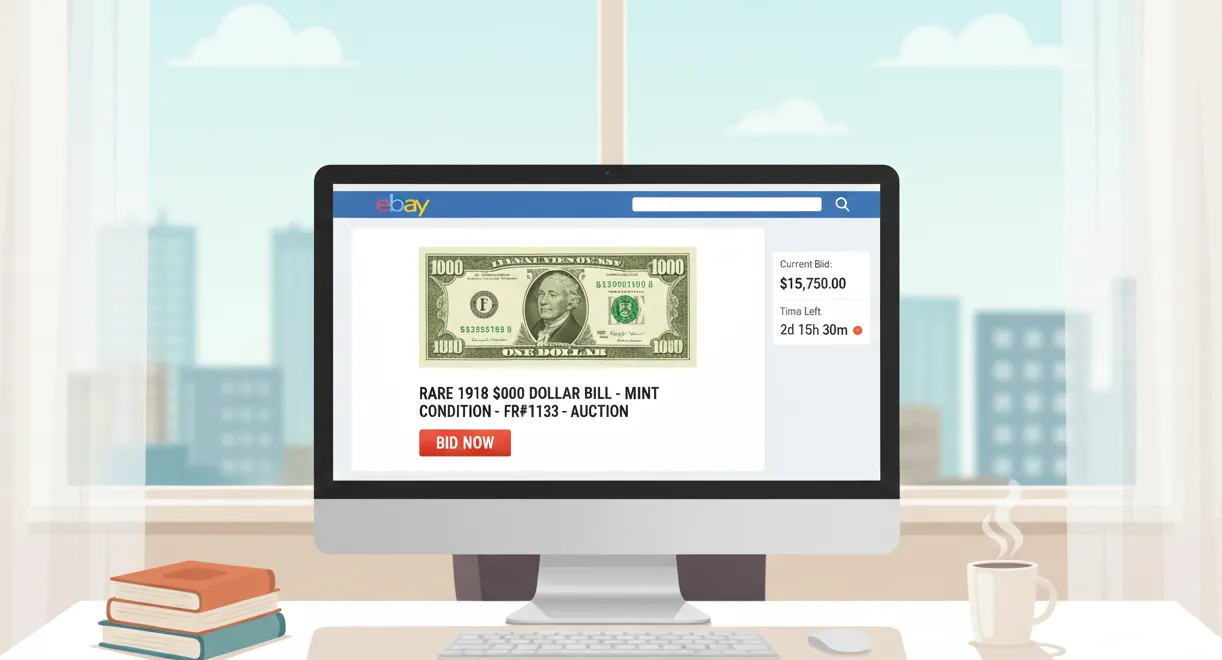
Special Serial Numbers
Low Serial Numbers
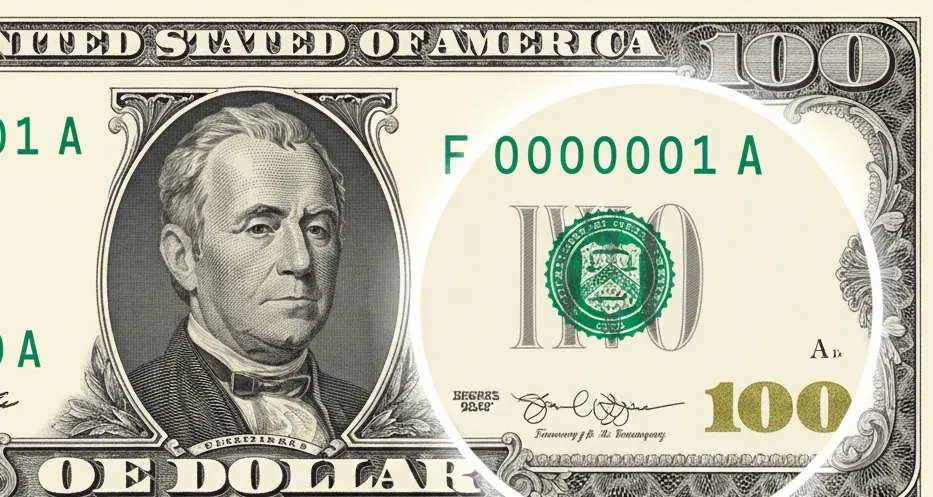
These special numbers begin with many zeros, with these numbers being the first bills printed in a certain numbering group.
The number 00000001 is the most liked, being the very first bill printed in the series, and it has the ability to cost thousands of dollars more than the usual bill price, depending on how new the bill looks.
Numbers from 00000001 up to 00000100 are good for collecting, with more zeros in front meaning a higher price for the bill.
The number 00000010 will be worth more money than the number 00000100 because the first one has seven zeros at the start, and the second one has only five zeros. Six zeros at the start, like 00000055, are a hard-to-find kind of number.
Block numbers, for example, 00001000 or 00010000, also count as low serials, carrying extra value because they are the first number in a new group of ten numbers, making them simple to notice.
Any number having four or five zeros at the front is already a collectible number, holding extra value for the person who owns it.
Solid or Full Serial Numbers
Solid numbers are serial numbers where every one of the eight digits is the same, making them some of the hardest numbers to find, which is why collectors call them the “best find.”
Examples of solid numbers are 11111111, 22222222, and 99999999, showing a perfect, easy-to-see pattern.
Since the numbering starts at 00000001, the number 00000000 is never put into use, meaning only nine solid numbers can be printed in every series, making them very hard to find.
Finding a solid number is very hard because it is so rare, with a solid number on a $1000 bill raising its price many times over, no matter which series the bill belongs to.
The worth of a solid number does not change based on the number itself, but some collectors might like “lucky” numbers such as 7 or 8.
Any solid number, having eight digits that are all the same, is the most special kind of number you can find, beating all other math combinations.
Radar Serial Numbers
A radar number reads the same whether you read it from left to right or from right to left, acting like a mirror image.
Good examples of radar numbers are 12344321, 58000085, and 91199119, showing a pleasing look because of their balance.
People like radar numbers because of their math balance and how good they look, but they are still not as hard to find as the solid numbers or the numbers starting with many zeros.
There are different kinds of radar numbers that can be checked with a coin worth app, making some even better than others.
- The normal radar: The number is perfectly balanced around the middle line, for example, 14555541.
- The super radar: A harder-to-find type where all numbers are the same except for the one or two numbers in the middle, such as 77744777.
- The radar-repeater: The number works as a radar and also has a repeating part, for example, 12122121.
Based on how perfect the balance is and how many different numbers are used, radar numbers can have different prices for collectors.
Binary Serial Numbers
A binary number is made up of only two different numbers, with the two numbers themselves not mattering too much.
Examples of binary numbers are 11001100, 22299922, and 54545454, showing a simple structure.
The most special binary numbers are those using only the numbers zero and one, being the closest to computer code, and having a simple look.
A number where the two digits go back and forth, like 81818181, also holds extra worth, with people calling it a binary repeater.
If the two numbers are spread out equally, like four ones and four zeros, the number will be worth more than a number where the digits are not equal, such as seven ones and one zero.
The worth of binary numbers gets bigger as their math looks get better, making the number 10101010 better than the number 11111100 for collectors.
Repeater Serial Numbers
These are numbers having a clear pattern that is easy to see and repeat.
- The full repeater: The first four numbers are the same as the last four numbers, for example, 12341234 or 56785678.
- The triplet repeater: Numbers using repeating groups of three, like 11122211 or 33388833.
- The double repeater: Numbers with repeating groups of two, for example, 11223344.
The simpler and clearer the pattern is, the higher the price for collecting, with full repeaters being liked because they fit into the group of rare math structures.
Ladder Serial Numbers
A ladder number is a set of numbers that go in order, either going up or going down.
The full ladder is where the numbers go strictly in order from one to eight or from eight to one, with examples being 12345678 and 87654321, being extremely hard to find, since only two such combinations can be in every series.
The partial ladder is a number where the order is not complete, but still has a long string of numbers in order, for example, 12345677 or 01234567.
The full ladder 12345678 is the hardest one to find in this group, with its price being close to that of the solid numbers.
Star Notes
A Star Note is a bill printed to replace a bill that had a mistake, with the Star Note having the same series number but ending with a star sign (*).
Star Notes are rare just because they are made, making up only a small number of all the bills printed, holding a special place in collections.
The worth of a Star Note gets much bigger if it also has one of the rare serial numbers mentioned before, for example, a low radar number with a star, with this mix of two rare things making the bill very costly.
For Star Notes, it is good to look up the list of rare replacement number groups, because some groups of Star Note numbers were printed in a very small amount, showing extra value, and can be determined with a coin identifier app free.
| Number Type | What It Looks Like | Example |
| Solid (All Same) | All eight numbers look the same. | 55555555 |
| Low | Starts with the biggest number of zeros. | 00000005 |
| Full Ladder | All numbers go exactly in order. | 12345678 |
| Radar (Mirror) | Reads the same when going forward and back. | 87655678 |
| Binary | Only has two different numbers used in it. | 10101010 |
| Full Repeater | The first half of the number is the same as the second half. | 98769876 |
Things That Change the Final Price
A rare serial number is not the only thing that decides the final selling price of a $1000 bill, since other facts also make a big difference in the money collectors pay.
Bill Condition
The condition is a main thing that can make the final price go up or down a lot, with other small details making a big difference in the money collectors pay. People who collect money use a special list to check how good the bill looks.
- UNC (Uncirculated): Looking perfect, like the bill just came from the printing machine, with no marks from folding, no dirt, or any damage, having rare serial numbers on bills in this condition brings the most money.
- AU (About Uncirculated): Looks almost perfect, maybe having only one small fold.
- VF (Very Fine): The bill has been used, showing a few folds up and down and side to side, but still looking clean and having bright colors, with the price of the rare serial number going down here.
- F (Fine): The bill shows clear signs of being used, having many folds and some dirt, with the rare serial number still being wanted, but adding only a small amount to the price.
A $1000 bill looking perfect (UNC) with a solid serial number will cost much more than the same bill with the same number but looking bad (F).
Series Year
The $1000 bill was made in different years, with the oldest years being the most special for people who collect money.
The years 1928 and 1934 are seen as better, being older than the others, with a rare serial number on these old bills adding more money to their basic worth for collectors.
The year the bill was made is written on the front side of the bill.
Other Mistakes
Sometimes, mistakes made during the printing process can also add to the worth of the collection, even though a printing mistake is not directly about the serial numbers.
For example, a print that is not straight, numbers that do not match, or a bill that was not cut all the way, with a rare serial number found with such a mistake, has the chance to make the price go up even more.
How to Check the Number
To check the serial number on your $1000 bill, you should take these simple steps, making sure you know what you have.
First, look at the number itself, which has letters, eight numbers, and a star if it is a Star Note.
Then, check the eight numbers using the types explained above: low, solid, radar, binary, or ladder.
You can use online number tools to be sure your bill is a mirror number or a two-digit number.
Last, talk to a money expert or collector who knows about rare serial numbers, since only a person with experience can give a true guess of the bill’s price.