
The Lincoln Wheat Penny is more than just a coin — it’s a touchstone of American history that links generations through design, politics, and the evolution of money. Found in dusty attics, grandpa’s coin jar, and even the occasional pocket, this unassuming cent has become one of the most collected coins in the United States. To understand the true Lincoln wheat penny value, both financial and historical, we must go a long way.
The Birth of an American Classic
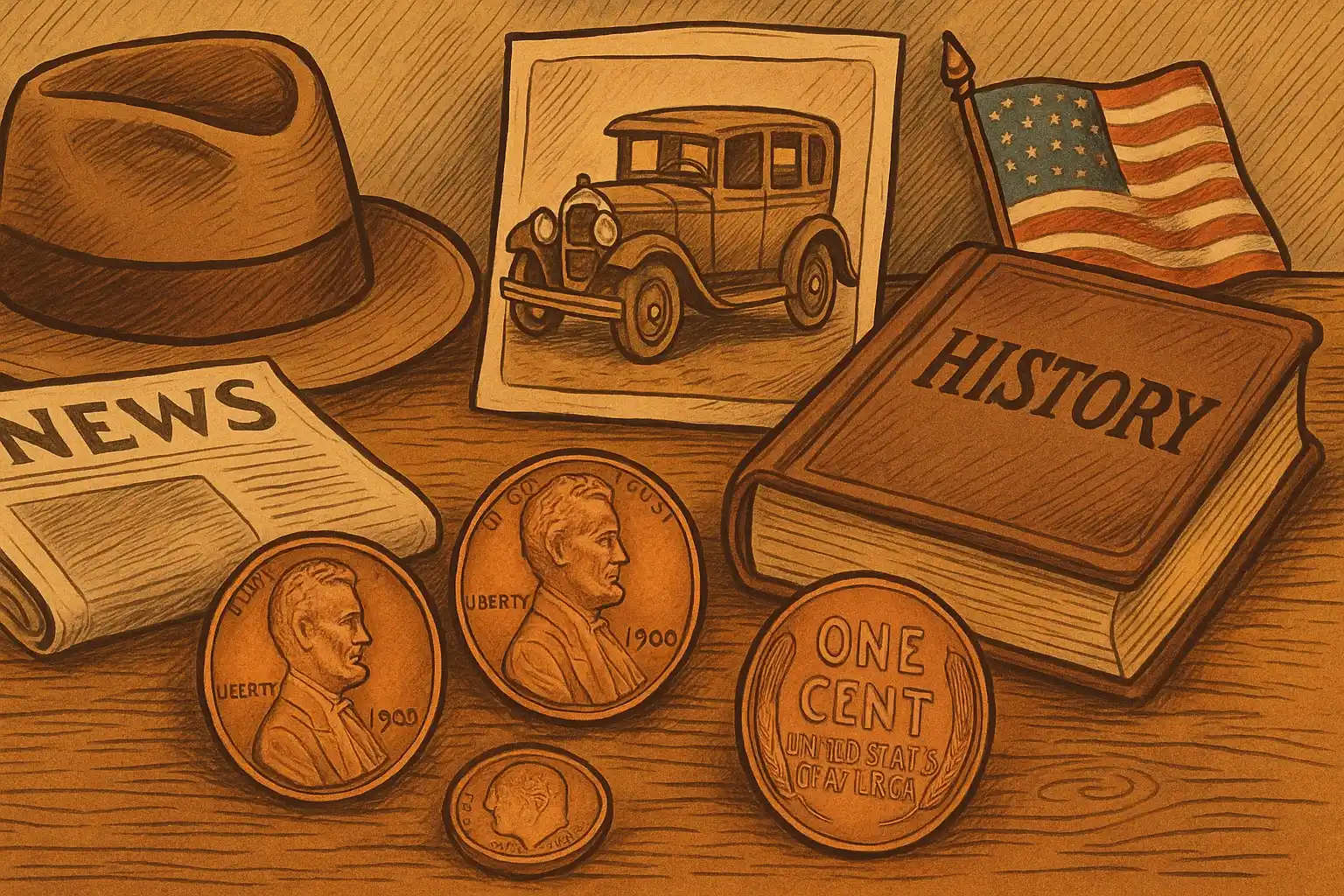
In 1909, the United States Mint broke with a longstanding tradition: for the first time, a real person — not an allegorical figure — was featured on a circulating coin. That person was none other than Abraham Lincoln, and the coin was the now-famous Lincoln Wheat Penny, also called the “Wheat Cent” due to its distinctive reverse design.
This departure from classical motifs came as part of President Theodore Roosevelt’s sweeping reform to make American coinage more artistic and meaningful. He wanted coins that symbolized the nation’s identity — and what better way to do so than to honor the Great Emancipator on the centennial of his birth?
Roosevelt selected Victor David Brenner, a Lithuanian-American sculptor known for his expressive portraiture, to design the coin. Brenner’s obverse depiction of Lincoln was modeled after a bronze plaque he had made years earlier and remains one of the most enduring designs in U.S. numismatics. The coin debuted on August 2, 1909, to considerable public interest and national pride.
The Meaning Behind the Design
The Lincoln Wheat Penny is a masterclass in minimalist symbolism. Each element on the coin serves a specific purpose and tells a piece of America’s story.
Obverse (Front): Lincoln’s Portrait
- Designed by Brenner, Lincoln’s right-facing profile captured the president’s calm dignity.
- It marked the first time a U.S. president appeared on circulating coinage.
- The design has proven so timeless that it continues to appear, with slight modifications, on modern pennies today.
Reverse (Back): Two Wheat Stalks
- Flanking the central words “ONE CENT” and “UNITED STATES OF AMERICA” are two sheaves of wheat.
- These symbolize America’s agrarian roots and prosperity.
- The simplicity of the layout gives it a strong visual balance and helped earn it the nickname “Wheat Penny.”
Mint Marks and Their Meaning
Mint marks tell collectors where the coin was struck:
- No mint mark = Philadelphia
- “D” = Denver
- “S” = San Francisco
Knowing the mint mark is crucial for identifying rare varieties. For example, the 1909-S VDB, produced in San Francisco and featuring Brenner’s initials, is one of the most valuable Wheat Pennies in existence.
Early Popularity and Controversy
The 1909 release was a national event — but not without controversy. Some critics felt that Brenner’s initials “V.D.B.” were too prominent on the coin’s reverse, accusing him of self-promotion. As a result, the U.S. Mint quickly removed the initials, making early 1909 coins with “VDB” exceptionally rare.
This short-lived version, the 1909-S VDB, had a mintage of just 484,000 coins. Today, that rarity commands steep prices at auction, often starting at $700 in worn condition and soaring past $10,000 in mint state.
Key Dates That Collectors Seek
Some Lincoln Wheat Pennies are far more difficult to find than others due to limited mintages or short production runs. Here are a few of the most valuable and sought-after issues:
1. 1909-S VDB
- Why it’s valuable: First year of issue + designer’s initials + low mintage (only 484,000 struck)
- Current value:
- Circulated: $700+
- Mint State: $2,000 to $12,000+
2. 1914-D
- Why it’s valuable: Minted in Denver, this cent had only 1.2 million made. Many were heavily circulated.
- Current value:
- Circulated: $200+
- Mint State: $2,500 to $8,000+
3. 1922 (No D)
- Why it’s valuable: A Denver-only issue, but some coins were weakly struck, omitting the “D” mint mark.
- Current value:
- Circulated: $600+
- Mint State: $5,000+
Wartime Rarity: The 1943 Steel Cent
One of the most dramatic changes in the Lincoln Wheat Penny series came during World War II, when copper was urgently needed for shell casings and military equipment. As a result, in 1943, the U.S. Mint struck pennies from zinc-coated steel, resulting in a shiny, silver-like appearance.
- 1943 Steel Penny (standard):
Common and worth $0.10–$2 in circulated condition. - 1943 Bronze Penny (error):
A few were accidentally struck on leftover copper planchets. These are extremely rare.
Value:- Circulated: $100,000+
- Mint State: Up to $1 million+
- One example sold for $1.7 million at auction.
Famous Errors: The 1955 Doubled Die
In coin-collecting circles, few errors are as famous — or as visually striking — as the 1955 Doubled Die Obverse. Caused by a misalignment during the die creation process, this error led to doubled text in the date and inscriptions like “LIBERTY” and “IN GOD WE TRUST.”
- How to spot it:
Clear doubling in the date and letters — no magnification needed. - Value:
- Circulated: $1,000+
- Mint State: $10,000 or more depending on quality
🔎 Tip: Be wary of fakes — the popularity of the 1955 Doubled Die has made it a frequent target for counterfeiting.
Value Summary Table
| Year / Variety | Typical Value (Circulated) | High Grade Value |
| 1909-S VDB | $700+ | $2,000–$12,000+ |
| 1914-D | $200+ | $2,500–$8,000+ |
| 1922 (No D) | $600+ | $5,000+ |
| 1943 Bronze (error) | $100,000+ | Up to $1 million+ |
| 1955 Doubled Die | $1,000+ | $10,000+ |
Note: Coin values depend heavily on condition, rarity, and demand.
Using Technology: Coin ID Scanner
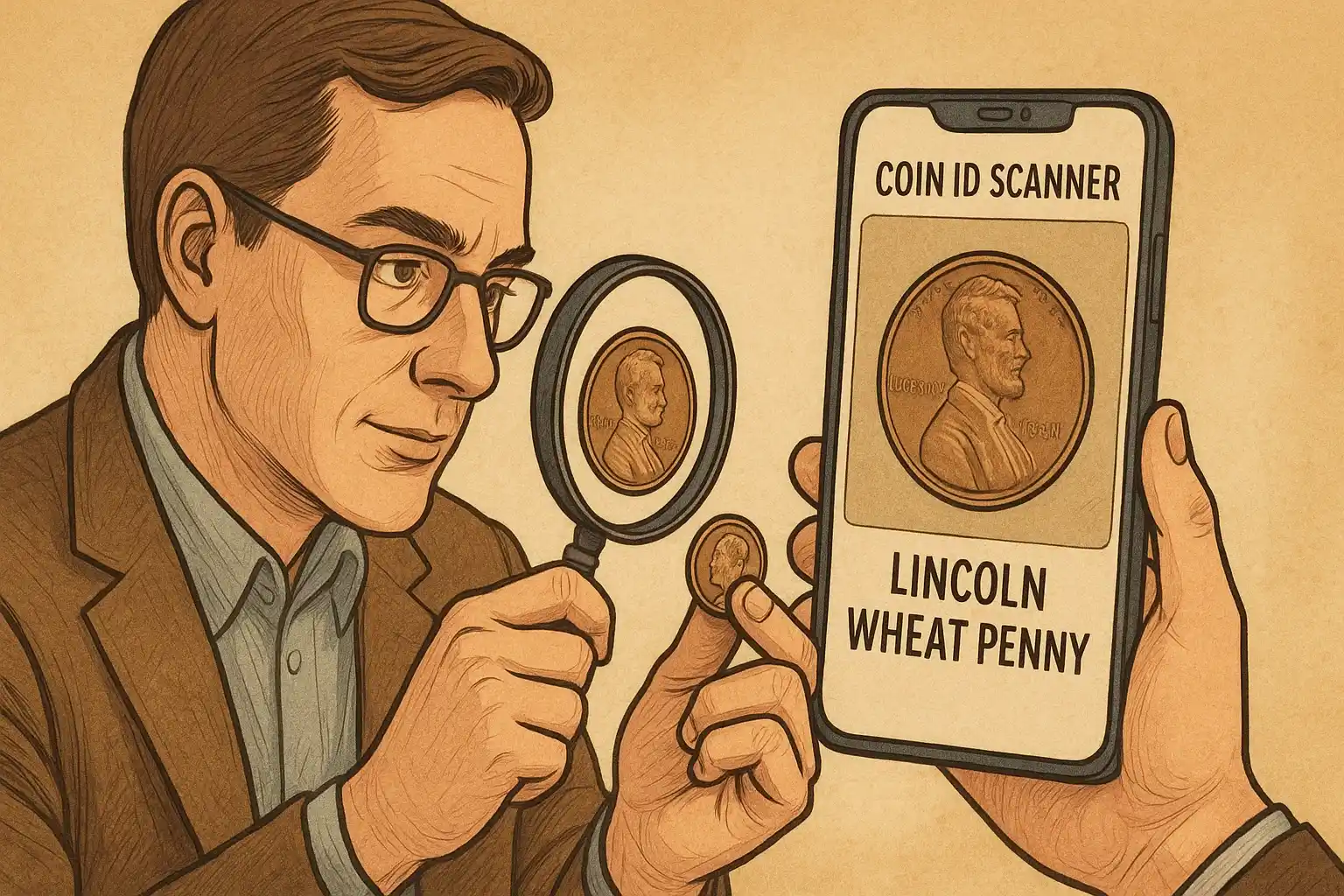
For collectors — especially beginners — determining the authenticity and value of a wheat penny can be challenging. That’s where the Coin ID Scanner app comes in.
What It Does:
- Instantly scans your coin using your smartphone’s camera
- Identifies year, mint mark, and errors
- Gives real-time value estimates based on market trends
- Provides historical context and minting information
This tool helps eliminate guesswork, making it easier to recognize whether your penny is just pocket change or a collector’s dream.
Ways to Start or Expand Your Wheat Penny Collection
There’s no single “right” way to collect Lincoln Wheat Pennies, which is one of the reasons the series remains so beloved. Depending on your goals and budget, here are a few popular collecting strategies:
1. Complete Year Set (1909–1958)
- Collect one penny from each year the Wheat design was issued.
- Basic sets are affordable and easy to find through coin shops or online.
- Rarer coins (e.g., 1909-S VDB, 1914-D) can be added over time as investments.
2. Date & Mint Mark Set
- A more advanced challenge: collect each year and mint variation (Philadelphia, Denver, San Francisco).
- Example: 1931-P, 1931-D, and 1931-S are all distinct coins.
3. High-Grade Set
- Focus only on uncirculated (MS-60 and above) examples for visual appeal and future value.
- Requires more upfront investment but offers stronger long-term potential.
4. Error and Variety Set
- Collect famous misstrikes like the 1955 Doubled Die or 1922 No D.
- This niche set is popular among seasoned collectors and often commands high prices.
5. Wartime Issues Set
- Focus on 1943 steel cents and transitional errors like the 1943 bronze or 1944 steel varieties.
📦 Pro Tip: Store your collection in acid-free coin albums or holders with individual slots labeled by year and mint mark. Avoid PVC plastics — they can damage coins over time.
Protecting and Storing Your Wheat Pennies
Preserving the condition of your coins is essential if you want to maintain or increase their value. Here’s how to keep them safe:
✔️ Storage Tips
- Use airtight capsules or 2×2 cardboard holders with Mylar windows.
- Store in cool, dry environments to prevent corrosion.
- Keep coins away from direct sunlight and humidity.
✔️ Handling Tips
- Always hold coins by the edges, never the face.
- Use cotton gloves when handling high-grade or uncirculated coins.
✔️ Security
- Keep your most valuable pieces in a safe or safety deposit box.
- Photograph and catalog your collection for insurance and personal records.
Tips for Spotting Valuable Pennies in the Wild
- Roll hunt: Buy rolls of pennies from the bank and search through them.
- Check estate sales and flea markets: You never know what might be overlooked.
- Ask older relatives: Many Wheat Pennies are still sitting untouched in drawers and jars.
- Look for anomalies: Odd weights, missing mint marks, or off-center strikes may indicate valuable errors.
Over a century after its debut, the Lincoln Wheat Penny continues to capture the imagination of collectors across the globe. It stands not only as a tribute to Abraham Lincoln but also as a symbol of American resilience, artistry, and transformation. With over 50 years of history packed into a tiny copper coin, each piece tells a story — and some might just tell one worth thousands of dollars.Whether you’re a beginner marveling at a steel cent or a seasoned numismatist tracking down a 1909-S VDB, the thrill of the hunt never fades. And with tools like the Coin ID Scanner app, discovering the hidden gems in your pocket change has never been easier.