
The 1911 Wheat penny value makes more sense when the year is split into its real parts. The date is not one flat market. It has a large Philadelphia issue, a better Denver coin, and a lower-mintage San Francisco coin. Color matters too. So does surface quality. That is why the year deserves more than a basic price list.
The 1911 cent is an early Lincoln Wheat issue with the standard bronze composition of 95% copper, 5% tin, and zinc, a weight of 3.11 grams, and a 19 mm diameter. Those numbers stay the same across the main business strikes. The market does not. Mint mark, color, and grade change the picture fast.
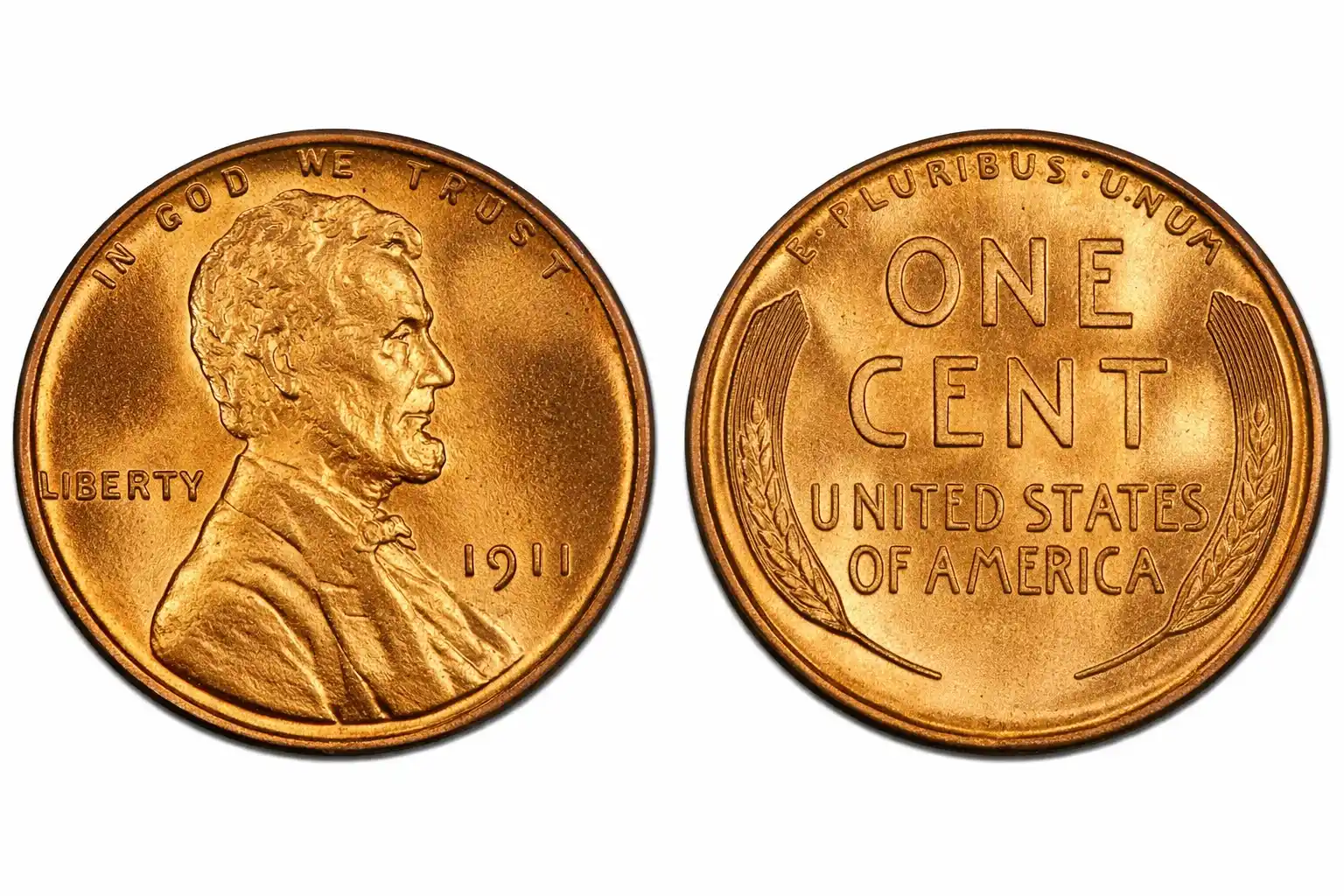
Why 1911 Is More Interesting Than It First Looks
Many collectors treat 1911 as a simple early Wheat cent. That works for a quick overview, but not for real collecting. The Philadelphia coin is common enough in circulated grades. The Denver coin is the first Denver Lincoln cent. The San Francisco coin has the lowest mintage of the three. Those points push the three issues into different collector lanes.
That split matters because collectors do not buy this year for one reason only. Some want an early Lincoln type coin. Some want the first Denver issue. Some want the lower-mintage San Francisco piece. Some are focused on color, especially Red examples. These goals produce different price levels and different buying strategies.
Why collectors watch 1911
- Early Lincoln Wheat cent
- First Denver issue in the series
- Lower-mintage San Francisco coin
- Strong BN, RB, and RD separation
- Wide spread between average and premium pieces
The Three Main 1911 Business Strikes
The first step is simple. Separate the year by mint mark before thinking about value.
| Issue | Mintage | Basic market position | Main collector angle |
| 1911 | 101,177,787 | Common in circulated grades | Early type, grade, and color matter |
| 1911-D | 12,672,000 | Better date | First Denver Lincoln cent |
| 1911-S | 4,026,000 | Scarcer issue | Strongest business-strike scarcity of the three |
This table explains the year better than a single value chart can. Philadelphia is the volume coin. Denver is much smaller and more interesting by status. San Francisco is the lowest-mintage circulation strike of the group.
1911 Philadelphia
The 1911 Philadelphia cent is the most available coin of the three in circulated grades. That makes it the easiest entry point for collectors who want an early Lincoln without moving into better-date territory. It is still not a throwaway coin in higher grades. PCGS notes that the 1911 is scarcer in Mint State than the 1909 and 1910. That keeps the upper end more selective than many beginners expect.
1911-D
The 1911-D has a different role. It is the first Denver Lincoln cent, and the market treats it as more than a routine branch mint issue. Greysheet calls it a semi-key and notes that high-end Red examples are very scarce. The strike is often soft. That matters because weak detail reduces eye appeal even before color is considered.
1911-S
The 1911-S is the lowest-mintage business strike of the three. PCGS notes that it is one of the better early Lincolns in all grades, very scarce in Mint State, and rare in Gem Full Red. That gives the coin a stronger scarcity story from the start. Even so, not every 1911-S is a top-tier coin. Surface quality and color still decide a great deal.
Mint Marks First, Then Market Position
The main mistake is treating all three 1911 cents as one value story. They are not. The same grade label does not create the same result across Philadelphia, Denver, and San Francisco.
Philadelphia usually works as the affordable early type coin. Denver works as the better-date coin with extra demand because of its place in the series. San Francisco works as the lower-mintage coin that brings stronger collector pressure sooner. Once that structure is clear, the year becomes much easier to read.
Color Changes the Coin
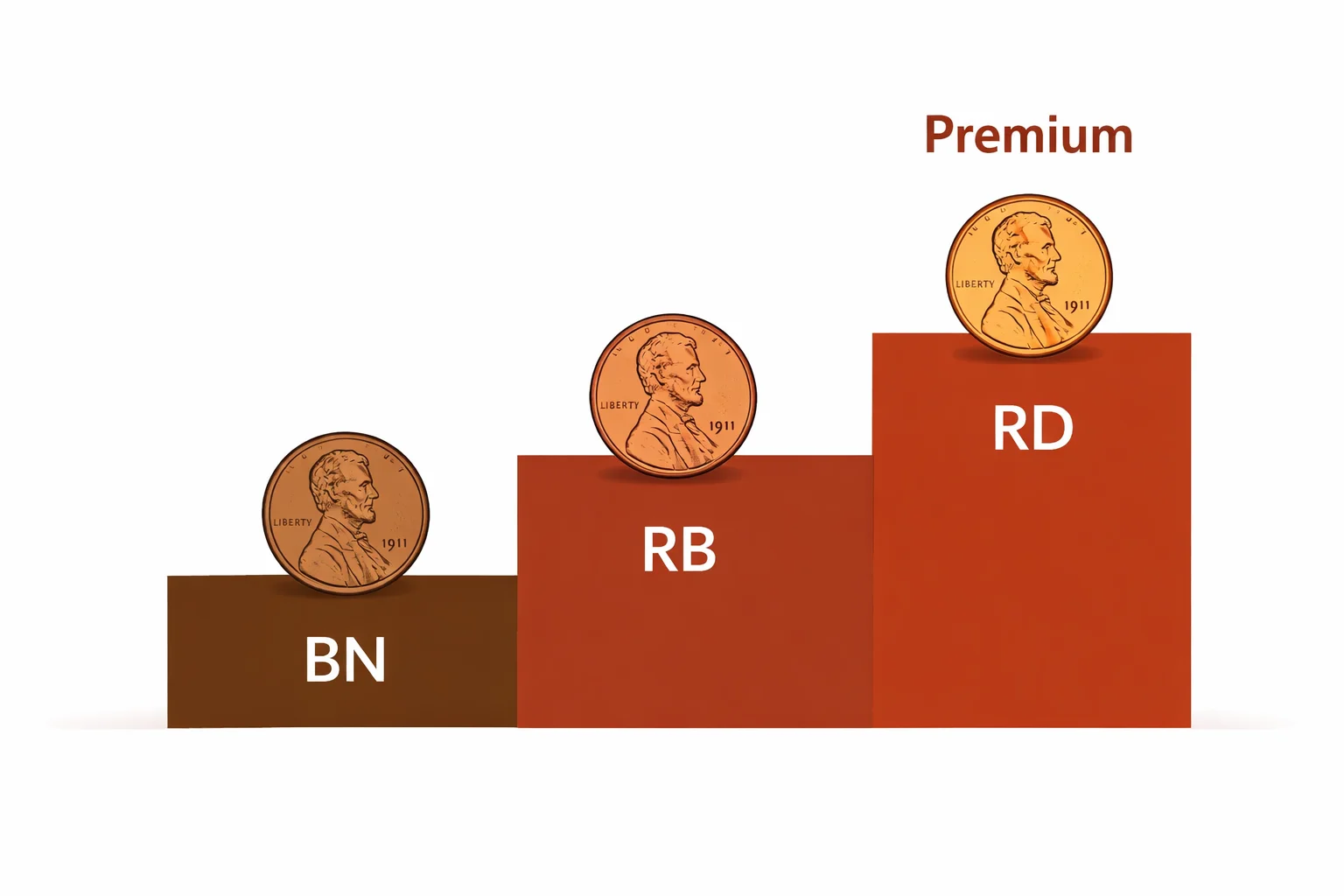
Color is one of the biggest price drivers on early Lincoln cents. The labels BN, RB, and RD are not small technical details. They create separate market tiers.
Brown
Brown coins are the most common entry point. They are often the practical choice for collectors who want a date-and-mint set without paying strong Red premiums. On a Brown coin, originality matters more than brightness. Honest surfaces are usually more important than color intensity.
Red-Brown
Red-Brown sits in the middle. It gives some color appeal without the full jump in price that often comes with Red pieces. For many collectors, this is the best balance between cost and appearance, especially on better dates.
Red
Red is where the market gets narrow. This matters most on 1911-D and 1911-S. Greysheet notes that the 1911-D becomes a true challenge in high Red grades, while PCGS notes that the 1911-S is rare in Gem Full Red. Red changes the conversation from a collector piece to a premium coin very quickly.
| Color | Typical role | What buyers check | Market effect |
| BN | Entry tier | Originality, steady surfaces | Lower but stable |
| RB | Middle tier | Eye appeal plus partial red | Moderate premium |
| RD | Premium tier | Strong original red color | Sharp premium jump |
Surfaces and Strike Still Matter
Color is not enough by itself. Two coins with the same designation can sell far apart because of surface quality. This is especially true on early Lincolns, where spots, dull fields, weak rims, and old cleaning can change the whole look.
The 1911-D adds one more problem. Greysheet notes that the strike is generally soft. That means even coins with good color may still look less sharp than the buyer wants. The 1911-S is usually struck better, but scarcity keeps pressure on the price. Philadelphia gives more room for careful picking, especially in Brown and Red-Brown.
Collectors usually check
- Lincoln’s cheek
- Field texture
- Wheat line clarity
- Rim quality
- Spots or old cleaning
- Overall balance of color and strike
Where the Real Premium Starts
The premium does not begin at the same point for all three coins. That is why a flat “1911 Wheat cent value” range can mislead more than it helps.
| Issue | Lower-grade logic | Mid-grade logic | High-grade logic |
| 1911 | Mostly common date | Surfaces and color start to matter | Strong RD coins become selective |
| 1911-D | Better date pressure appears earlier | Premiums build sooner | High RD becomes difficult |
| 1911-S | Scarcity visible early | Collector demand stays strong | Original high-end coins stand out sharply |
This is the practical takeaway. Philadelphia usually needs a stronger quality to break away from the common date group. Denver starts from a better date position. San Francisco starts with lower-mintage support. The year only looks simple when these three tracks are mixed together.
A Short Note on Proofs
The year also includes a Matte Proof cent from Philadelphia. PCGS lists the proof mintage at about 1,725. That is a separate market. It should not be mixed with the business strikes.
Proof collectors treat it as its own issue, with its own surface rules and rarity pattern. For this article, the important point is simple: the 1911 year is broader than the three circulation coins alone.
What to Check Before Judging Price
A practical review should move in a fixed order.
First-pass checklist
- Is it 1911, 1911-D, or 1911-S?
- Is the color BN, RB, or RD?
- Do the surfaces look original?
- Does the strike look weak or above average?
- Is the coin a business strike or a proof?
This is the stage where a coin value checker app can help. It can help sort the coin into the right mint and value lane before deeper price work begins. That is useful for inherited groups, mixed folders, and early Lincoln lots where a better coin can hide among commoner pieces. A quick app check helps with the first screen. The surface call still has to be made by eye.
What Kind of Collector Each Coin Fits Best
Not every 1911 cent serves the same goal.
| Collector goal | Best fit |
| affordable early type | 1911 |
| better date collecting | 1911-D |
| Lower-mintage challenge | 1911-S |
That table keeps the year practical. Philadelphia works well for type and grade study. Denver fits the collector who wants a better date with stronger market pressure. San Francisco fits the buyer who wants lower-mintage scarcity without moving straight into famous key dates.
Final View
The 1911 year becomes much clearer once mint marks and color are separated. Philadelphia, Denver, and San Francisco are not one market. They share a date, a design, and a composition. Their collector roles are different. That is the real key to understanding 1911 Wheat cent collecting.
For a fast first pass, a free coin identifier and value app can help sort 1911, 1911-D, and 1911-S coins before closer manual review. Coin ID Scanner is useful here because its database covers 187,000+ coins, and its collection management tools help keep mint-mark and color groups organized while you compare stronger pieces with ordinary ones. It helps with structure at the first stage. Final grading and buying decisions still depend on the coin in hand.